What is Ashtanga Yoga? And What is Mysore Style of Yoga?
Unlike the conventional led classes where a teacher guides students through each posture in unison, Mysore style Ashtanga Yoga classes are self-led. They encourage discipline and self-exploration within students. Practitioners move through the sequence at their own pace, with the Ashtanga Yoga teacher providing individualized attention, adjustments, and guidance. This method cultivates a deep sense of autonomy, body awareness, and internal focus. The role of the teacher in Mysore-style Ashtanga, therefore, is to guide students’ adjustments, and empower them to grow within their practice.
What is Ashtanga Yoga?
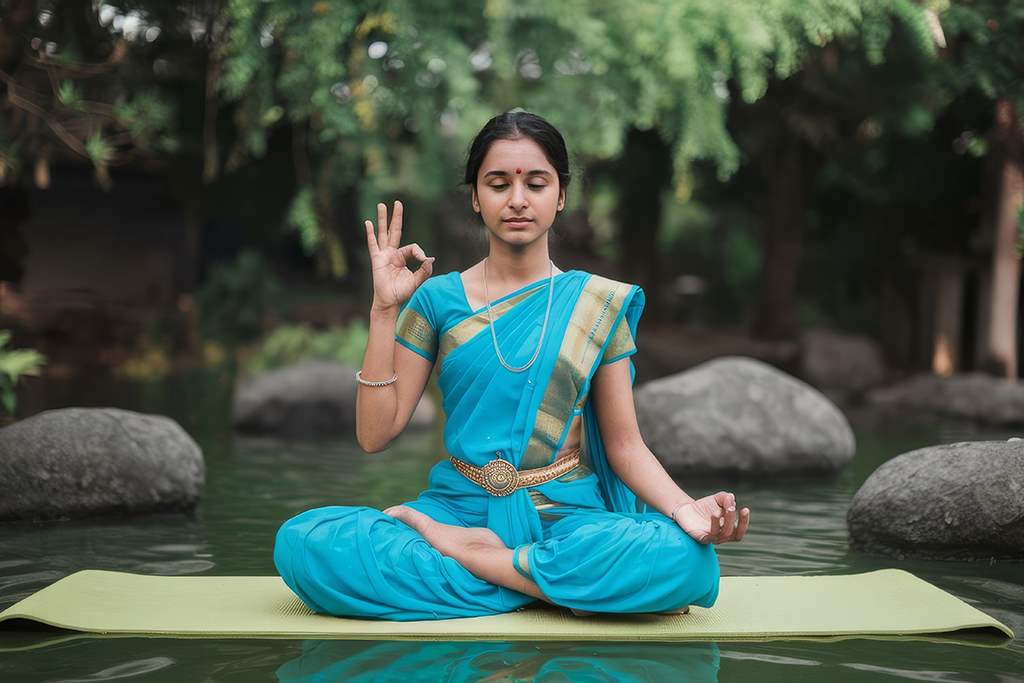
Ashtanga Yoga, meaning “eight-limbed yoga,” is a system or style of yoga derived from the ancient text Yoga Sutras of Patanjali. The eight limbs (Ashta = eight, Anga = limbs) provide a holistic framework for living a yogic life that includes moral and ethical principles, physical postures, breath control, sense withdrawal, concentration, meditation, and ultimately, self-realization. This comprehensive system emphasizes both external and internal practices to achieve harmony between the body, mind, and spirit.
The Eight Limbs of Ashtanga Yoga
To truly understand what Ashtanga Yoga is, let us look at the core principles of the Eight Limbs of Ashtanga Yoga, which are reflected in both its practice and philosophy:
- Yamas: Known as social norms, the Yamas are the first limb of the Eight Limbs of Ashtanga Yoga. They are ethical guidelines that form the foundation of a yogic lifestyle. They represent universal moral principles that encourage harmony in relationships with others and the world. The five Yamas are:
- Ahimsa (Non-Violence): The practice of non-harming or non-violence of thoughts, words, and actions.
- Satya (Truthfulness): Commitment to honesty, integrity and truthfulness in speech and actions while being mindful not to harm others.
- Asteya (Non-Stealing): The practice of non-stealing, which extends beyond physical possessions to include non-covetousness and the avoidance of exploiting others’ time, energy, or resources.
- Brahmacharya (Moderation): Often translated as celibacy or chastity, Brahmacharya in a broader sense refers to moderation and self-control in all aspects of life, especially in energy usage.
- Aparigraha (Non-Possessiveness): The principle of non-attachment to material possessions, people, or outcomes, and to living simply and being content with what one has.
- Niyamas: Known as personal observances, the Niyamas are personal practices that cultivate inner discipline and spiritual growth. They guide individuals in developing a disciplined, balanced and healthy relationship with themselves. They are:
- Saucha (Purity): The practice of cleanliness and purity of body, mind, and environment. Saucha involves maintaining a clean and orderly lifestyle, as well as purifying the mind of negative thoughts.
- Santosha (Contentment): The practice of cultivating contentment and gratitude for what one has. Santosha encourages finding joy in the present moment.
- Tapas (Discipline): The practice of self-discipline, austerity, and dedication to one’s spiritual path. Tapas generates inner heat, which burns away impurities and builds strength and resilience.
- Svadhyaya (Self-Study): The practice of self-reflection and self-inquiry. Svadhyaya involves studying sacred texts, observing one’s thoughts and actions, and seeking deeper self-awareness.
- Ishvara Pranidhana (Surrender to a Higher Power): The practice of surrendering to the divine or a higher power. Ishvara Pranidhana involves letting go of ego, control, and attachment, and trusting in the universe’s wisdom.
- Asanas: The physical postures are sequenced in a specific order, each designed to prepare the body for the next. In Ashtanga Yoga, asanas are categorized into six series, that is, Primary, Intermediate, and four Advanced series, each increasing in complexity and intensity. Every movement is initiated by the breath, promoting a sense of mindfulness and presence. This synchronized movement generates internal heat, which purifies muscles and organs through increased circulation, sweating, and detoxification.
- Pranayama: The fourth limb of the Eight Limbs of Ashtanga Yoga, Pranayama or breath control is integral to Ashtanga Yoga. There are many different types of breath control techniques in Ashtanga Yoga classes, depending on the level of one’s practice. During asana practice, practitioners use Ujjayi Pranayama (victorious breath), a breathing technique that creates a rhythmic and audible sound, which helps in maintaining focus and calming the mind.
- Pratyahara: This limb refers to the withdrawal of the senses. Pratyahara is the fifth limb of Ashtanga Yoga and represents the practice of withdrawing the senses from external stimuli. It is often described as “gaining mastery over external influences” and is the bridge between the external and internal limbs of yoga. In a world filled with distractions, Pratyahara teaches practitioners to turn their attention inward, away from the noise of the senses. By withdrawing the senses, one learns to observe thoughts and emotions without attachment or reaction.
- Dharana: Forming the sixth limb of Ashtanga Yoga, Dharana refers to concentration. It involves focusing the mind on a single point or object, such as the breath, a mantra, a visual image, or a part of the body. The goal is to maintain continuous, unbroken attention on the chosen point of focus, without allowing the mind to wander. Dharana requires mental discipline and is cultivated through consistent practice. By developing concentration, one prepares the mind for deeper states of meditation. In Ashtanga Yoga, Dharana is often practiced in conjunction with asana and pranayama.
- Dhyana: Dhyana, the seventh limb, is the practice of meditation or sustained, uninterrupted concentration. It is a state of deep awareness where the mind becomes absorbed in the object of meditation, transcending the limitations of time and space. The practitioner becomes fully immersed in the experience, observing without judgment or attachment. Dhyana involves a deep sense of stillness and inner calm, where the fluctuations of the mind cease, and a profound sense of unity with the object of meditation is achieved.
- Samadhi: The eighth and final limb of Ashtanga Yoga is Samadhi, that is, representing the ultimate goal of the yogic path – union with the divine or the experience of enlightenment. Samadhi is a state of profound inner peace, bliss, and self-realization, where the practitioner transcends the ego and experiences oneness with all that exists. Samadhi is often described as the merging of the individual self with the universal consciousness.
Mysore Style of Yoga Asana Practice
Mysore style is a traditional way of practicing Ashtanga Yoga. Unlike conventional guided classes where an instructor leads a group through a sequence, Mysore style classes are more personalized and self-paced. Key elements of Mysore style of yoga practice include:
- Self-Practice with Guidance: In a Mysore style class, each practitioner moves through the Ashtanga sequence at their own pace, following the specific order of postures. The teacher provides individualized guidance and adjustments based on the student’s level, ability, and needs. This personalized approach allows students to develop a deeper understanding of their practice, encouraging independence, mindfulness, and self-awareness.
- Progressive Learning: In the Mysore style, the teacher introduces new postures only when the student is ready, ensuring a safe and gradual progression. This step-by-step approach prevents injury, promotes mastery of foundational postures, and ensures a sustainable practice.
- Emphasis on Memorization and Internalization: Mysore style practice emphasizes memorization and internalization of the sequence. Without verbal instructions from the teacher, students must rely on their own memory and intuition, which cultivates focus, concentration, and presence. This meditative aspect transforms the practice into an inward journey, providing a mind-body connection and a sense of empowerment and confidence in one’s practice.
- Community and Individual Growth: Although Mysore style classes are self-practice sessions, they are conducted in a group setting, creating a sense of community and collective energy. Practitioners of varying levels practice side by side, inspiring and supporting each other while respecting their unique paths.
- Consistent Practice: Mysore style classes promote discipline and consistency. The format encourages students to take responsibility for their practice, helping them establish a regular routine that fosters growth and transformation.
The Philosophy Behind Mysore Style: Yoga as a Lifelong Practice
Mysore style practice is not just about achieving physical prowess or mastering advanced postures. It is a way of living and integrating yoga into daily life. The philosophy behind Mysore style emphasizes that yoga is a lifelong journey rather than a destination. Practitioners are encouraged to embrace patience, perseverance, and humility, understanding that the practice will evolve with time. Through consistent practice of Mysore style of yoga, dedication, and a sincere heart, one can unlock the transformative power of Ashtanga Yoga, leading to physical vitality, mental clarity, emotional balance, and spiritual awakening.
Ashtanga Yoga is a holistic path that encompasses a way of living with integrity, awareness, and mindfulness. The Mysore style captures the true essence of Ashtanga Yoga, making it a powerful practice that enables practitioners to reach new heights on and off the mat.
For aspiring teachers, there are many traditional Ashtanga Yoga teacher training courses. One can even explore in-person Ashtanga Yoga classes in Goa and many other parts of India. These traditional Ashtanga Yoga classes help students progress in a systematic and sustained manner, allowing for growth.